
My Body Parts Worksheet (Free PDF For Early Learners)
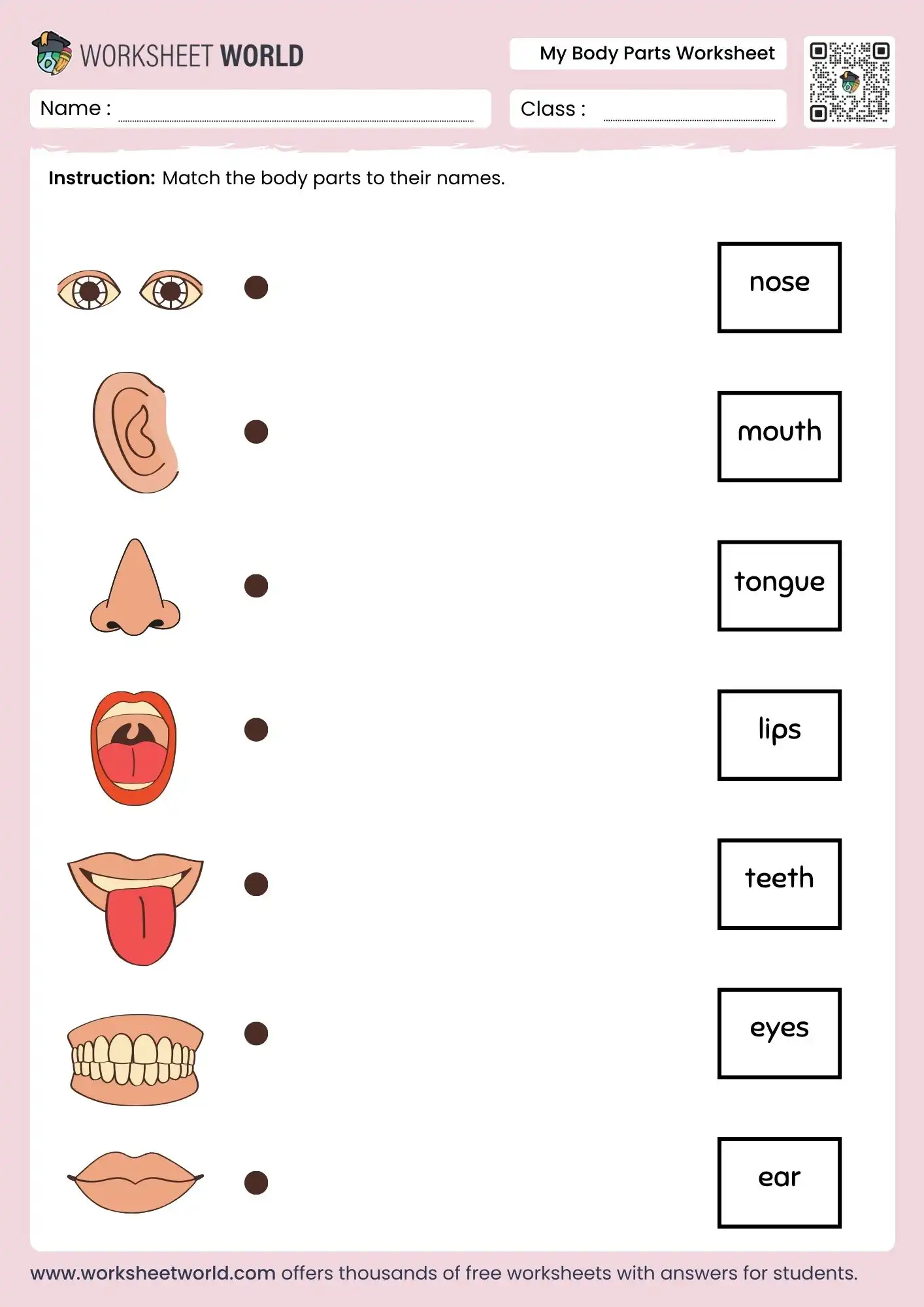
This my body parts worksheet is designed for LKG, UKG, and early grade learners to help them recognise different facial parts through a simple matching activity. Kids match each picture with the correct name, making it a fun way to build early vocabulary.
My Body Parts Worksheet With Answers and Free PDF For LKG, UKG and Grade 1
This activity introduces children to basic facial features using clear illustrations and readable labels. The matching format makes it easy for young learners to connect the picture with the correct word on the right side.
The worksheet supports early reading development and helps kids improve their observation skills. By identifying mouth, eyes, ear and similar parts, children learn essential vocabulary in a simple and confidence-building way.
Answers
Below are the correct matches based on the worksheet:
- Eyes
- Ear
- Nose
- Mouth
- Tongue
- Teeth
- Lips
Learning Outcomes
This worksheet helps children recognise facial features, improve visual understanding, and connect words with pictures. It also supports early reading skills, vocabulary development, and confidence in identifying common body parts.
FAQs
Here are a few helpful questions that parents and teachers often ask while teaching this topic.
What skills does a my body parts worksheet help develop?
It helps children learn to identify and name basic facial parts while improving picture-word association.
How can teachers use this worksheet in class?
It can be used for revision, oral practice, pair activities, or as a quick warm-up in early grades.
Is matching activity helpful for early learners?
Yes, matching strengthens memory, improves attention, and builds early recognition skills.
Quick Summary
This my body parts worksheet is a simple and effective tool for helping young learners recognise eyes, ear, nose, mouth and other facial features. The matching activity supports picture-word learning and builds confidence in early vocabulary. It is ideal for classroom use, home learning, or beginner EVS practice.
Was this worksheet helpful?
Download Our Official App
Get exclusive access to premium worksheet PDFs for free! Download the A To Z Worksheet App to explore 2,000+ interactive resources in 10+ languages. Perfect for offline learning and quick printing.

Explore Our Premium Worksheet Store!
Discover our premium collection of worksheets for kids of all ages! Available in English, Hindi, Gujarati, and Marathi bundles, these resources are perfect for home learning and classroom activities. Enhance your child’s learning experience with our carefully designed worksheets.
Explore Now*Terms & conditions apply. Worksheets are intended for educational purposes only.