
Parts Of The Body Worksheet For UKG
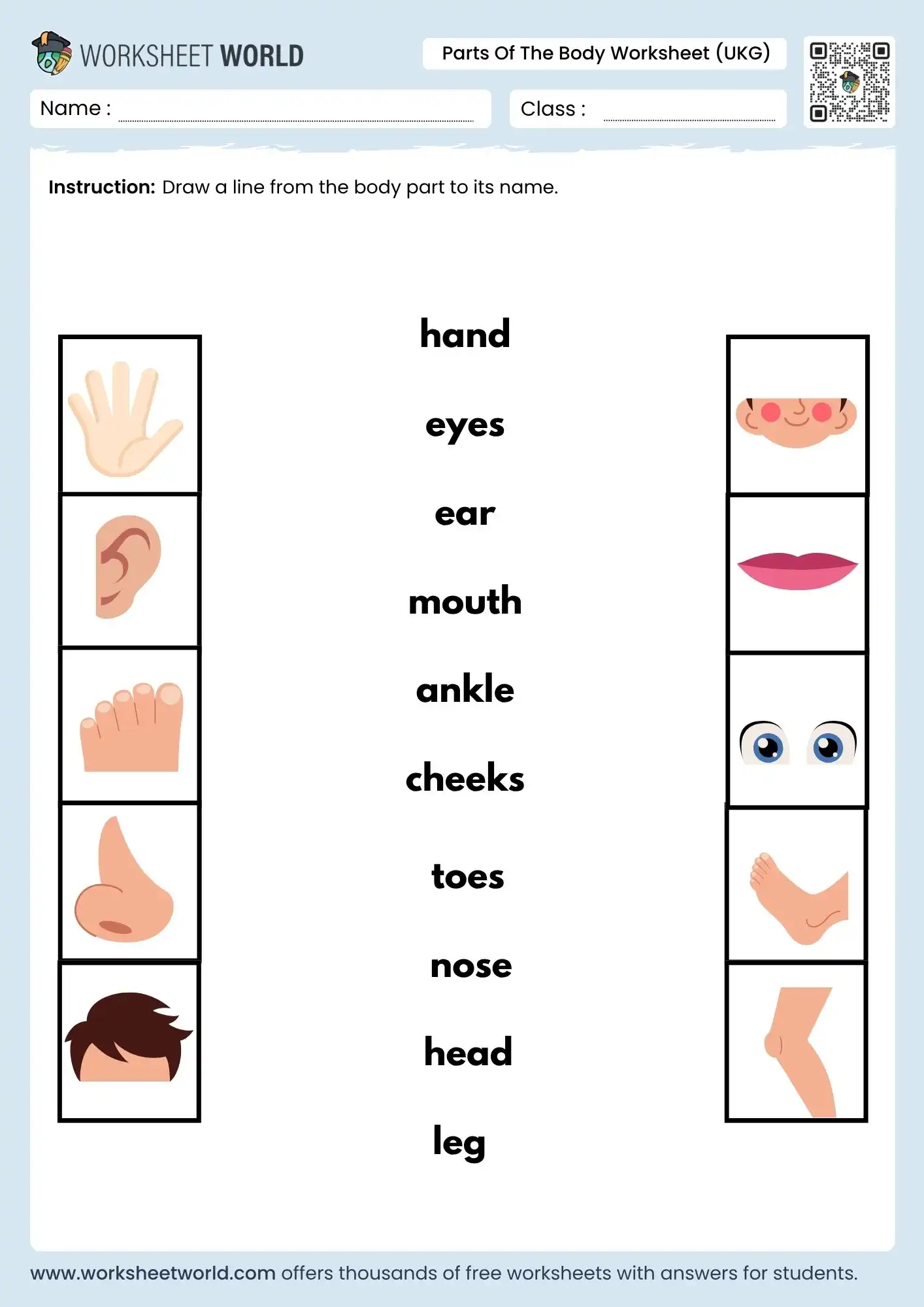
This parts of the body worksheet for UKG helps young learners recognise everyday body parts through a simple matching activity. Kids look at the pictures on both sides and draw a line to the correct word in the centre, making the exercise easy and enjoyable.
Parts Of The Body Worksheet For UKG With Answers and Free PDF
This activity builds early observation skills by helping children connect real-life body parts with their names. The pictures are large, colourful, and clearly drawn so that UKG students can understand them at a glance.
With words placed in the centre, children must scan both sides to locate the correct picture. This strengthens left-to-right tracking, early reading habits, and basic vocabulary development. The worksheet also supports quick revision in class or at home.
Answers
Below are the correct matches based on the worksheet:
- hand → hand (top left)
- ear → ear (second left)
- toes → toes (third left)
- nose → nose (fourth left)
- head → head (bottom left)
- cheeks → cheeks (top right)
- mouth → mouth (second right)
- eyes → eyes (third right)
- ankle → ankle (fourth right)
- leg → leg (bottom right)
Learning Outcomes
Children learn to identify common body parts quickly, strengthen their vocabulary, and improve picture-word association. The matching format also boosts focus, visual memory, and hand-eye coordination.
FAQs
These are some helpful general questions related to this worksheet topic.
How does a parts of the body worksheet for ukg help children learn?
It supports quick recognition of body parts through pictures and encourages early reading.
Is this worksheet suitable for classroom revision?
Yes, teachers can use it for warm-up tasks, homework, or quick oral drills.
Can younger learners use this worksheet?
Yes, the simple visuals make it useful for nursery and LKG children as well.
Quick Summary
This parts of the body worksheet for UKG gives children an easy way to practise identifying hands, ears, eyes, legs, and more. The matching activity encourages visual learning and helps kids connect real-life body parts with their names. It is ideal for quick classroom activities, revision, and home practice.
Was this worksheet helpful?
Download Our Official App
Get exclusive access to premium worksheet PDFs for free! Download the A To Z Worksheet App to explore 2,000+ interactive resources in 10+ languages. Perfect for offline learning and quick printing.

Explore Our Premium Worksheet Store!
Discover our premium collection of worksheets for kids of all ages! Available in English, Hindi, Gujarati, and Marathi bundles, these resources are perfect for home learning and classroom activities. Enhance your child’s learning experience with our carefully designed worksheets.
Explore Now*Terms & conditions apply. Worksheets are intended for educational purposes only.