

Q Alphabet Letter Tracing Worksheets
The study of modern typography continues with Q Alphabet Letter Tracing Worksheets. These educational resources are designed to help students master the continuous circular motion of the letter ‘Q’ while learning to add the distinct diagonal tail that separates it from other characters.
Q Alphabet Letter Tracing Worksheets With Answers and Free PDF For Preschool, Kindergarten To Class 1 or Grade 1
These Q Tracing Worksheet help kids practice the round-and-tail shape of this tricky letter. With clear dotted lines for both capital and lowercase Q, these sheets are easy to follow. Designed for LKG and kindergarten students, this page supports learning curves, slants, and grip coordination through fun repetition.
When kids trace tricky letters regularly, their hand control improves naturally. These exercises offer the right balance of challenge and support, giving children room to try, repeat, and succeed without pressure.
Answer
Children follow the dotted lines to trace capital Q and small q. They’re encouraged to say the letter aloud while tracing. Once they complete the rows, they write both forms of Q independently in the final space.
Learning Outcomes
- Students will achieve proficiency in drawing a complete circle with a precise diagonal stroke.
- Improved recognition of the “ku” sound through association with historical and modern imagery.
- Enhanced spatial awareness by learning to position the letter’s tail correctly within the lines.
FAQs
Is the letter ‘Q’ difficult for beginners?
The circle is easy, but the small diagonal tail requires focused hand-eye coordination.
Are these worksheets suitable for Grade 1?
Yes, they are perfect for reinforcing letter shapes for students in preschool through Grade 1.
Quick Summary
Q Alphabet Letter Tracing Worksheets offer a focused and efficient way for children to master one of the most unique letters in the alphabet. By utilizing clear stroke guides and high-quality PDF accessibility, these worksheets ensure that young learners build the manual dexterity and visual recognition necessary for alphabetical success.
Was this worksheet helpful?
Download Our Official App
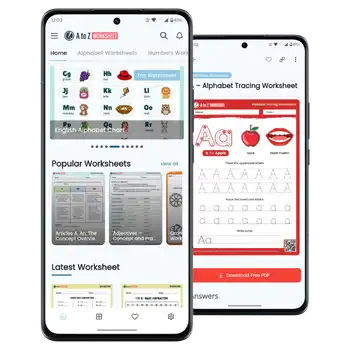
Get exclusive access to premium worksheet PDFs for free! Download the A To Z Worksheet App to explore 2,000+ interactive resources in 10+ languages. Perfect for offline learning and quick printing.

Explore Our Premium Worksheet Store!
Discover our premium collection of worksheets for kids of all ages! Available in English, Hindi, Gujarati, and Marathi bundles, these resources are perfect for home learning and classroom activities. Enhance your child’s learning experience with our carefully designed worksheets.
Explore Now*Terms & conditions apply. Worksheets are intended for educational purposes only.