
I Sound Words Worksheets (Phonics Practice With Pictures Free PDF)
These i sound words worksheets help children in LKG, UKG and Grade 1 learn different long-i and short-i sound patterns through picture-based spelling practice. With simple clues and clear visuals, kids can easily complete each word by choosing the right sound combination.
I Sound Words Worksheets With Answers and Free PDF For LKG, UKG and Grade 1
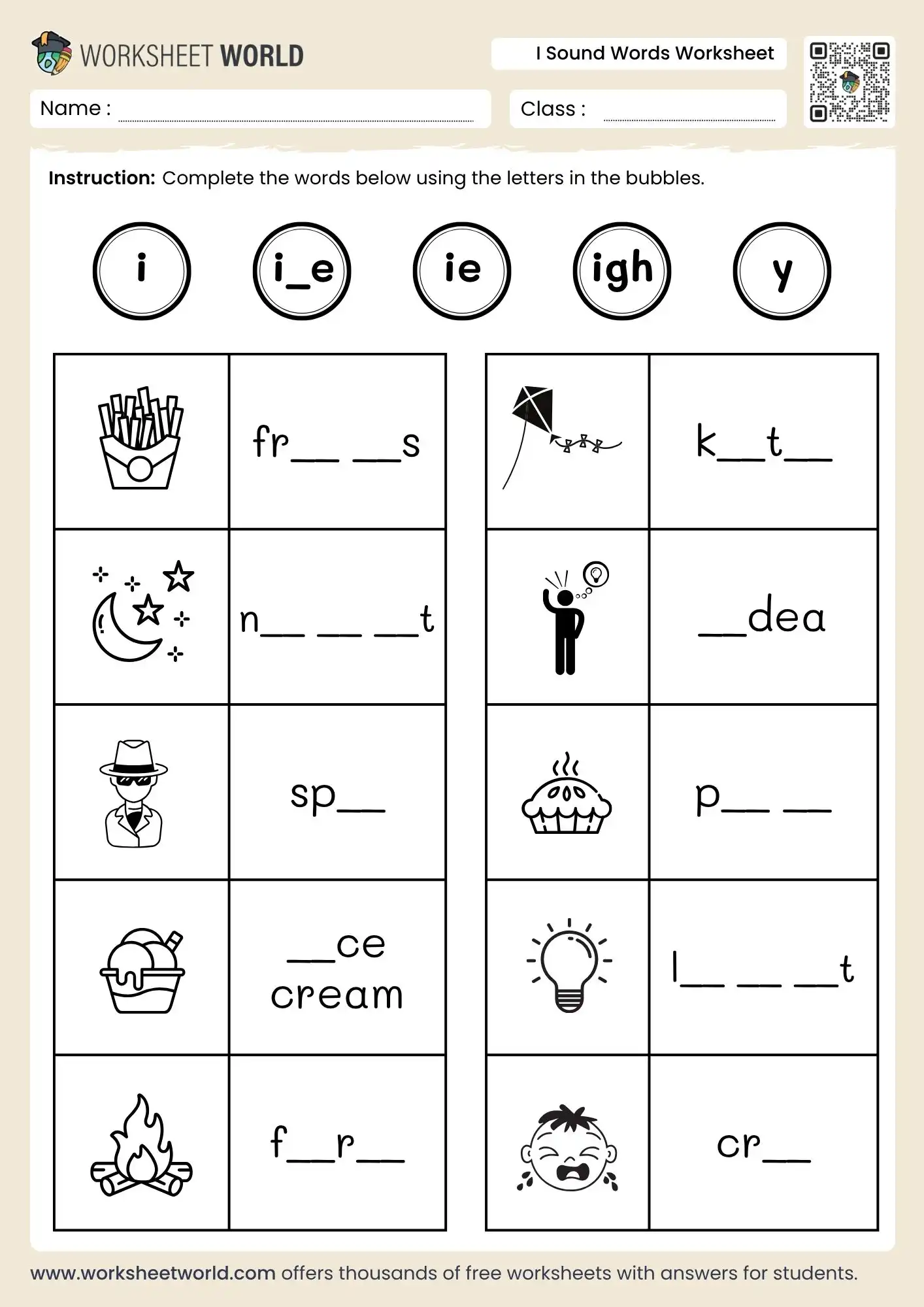
These worksheets make phonics learning simple by helping children identify the correct i-sound pattern such as i, i_e, ie, igh or y. Students look at each picture and complete the word using the right sound from the bubbles at the top.
This activity improves spelling confidence, sound recognition and vocabulary. By matching the correct i-sound with familiar images, learners strengthen their early reading skills in an interactive and engaging way.
Answers
Below are the correct answers based on the pictures shown in the worksheet.
- fries – fries
- kite – kite**
- night – night
- idea – idea
- spy – spy**
- pie – pie**
- ice cream – ice cream
- light – light
- fire – fire**
- cry – cry**
Learning Outcomes
This worksheet helps children understand different i-sound spellings, improves phonics accuracy and builds strong early reading habits. It also strengthens vocabulary by allowing kids to connect written sounds with real-life pictures.
FAQs
Here are some helpful questions related to this topic that may match your doubts.
How do i sound words worksheets help children?
i sound words worksheets help students recognise different i-sound spellings while improving phonics and reading skills.
What is the best way to teach long-i and short-i sounds?
Use picture-based worksheets, flashcards and small reading exercises to help children hear and identify the spelling patterns.
Can these worksheets be used for daily phonics practice?
Yes, children in early grades can use these worksheets every day to strengthen spelling and sound recognition.
Quick Summary
These i sound words worksheets help kids explore different i-sound spelling patterns through picture-supported tasks. Children complete each word by choosing the correct sound, improving spelling accuracy. With regular practice, learners build strong phonics skills and develop confidence in early reading.